Handling credit wisely. It’s in the cards.

by Laurie Campbell on July 22, 2010

Fellow Canadians, we are in debt big time according to a recent report by the Certified General Accountants Association of Canada.

Despite all the cautionary tales we might have learned from simply watching the evening news during the past couple of years, household debt in Canada reached $1.41 trillion at the end of 2009. That translates to a debt load of $41,740 for every man, woman and child in the country.

Now debt in and of itself is not a bad thing. Credit helps drive the economy, and it allows us to enjoy material goods that would otherwise be beyond our financial reach. Problems come in when we reach too far, too fast. And much of the overreaching has to do with what is called consumer debt, as opposed to secured debt.

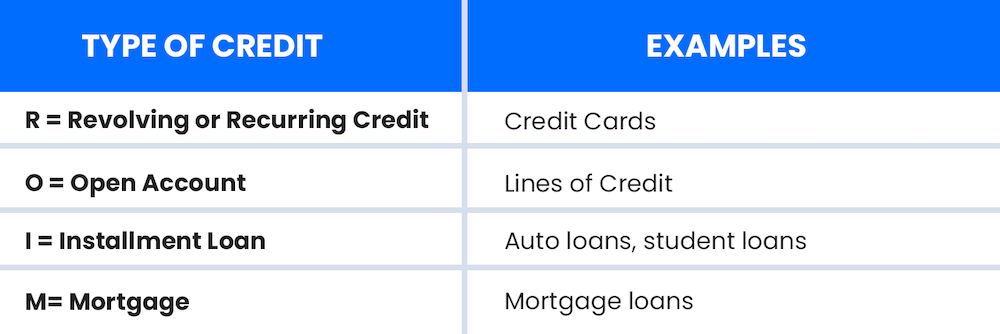
Secured debt is backed by assets or collateral, a prime example being a mortgage, which is generally less risky than consumer debt, which includes things like credit cards and lines of credit.

Credit card debt is often central to the problems facing the clients who come to us at Credit Canada for debt counselling. More and more, we see Canadians living beyond their means, financing their lives through high interest rate credit cards and lines of credit.

It’s the interest rates that get you. And there’s no sign that they’re going to remain manageable. 

Not too long ago, the Bank of Canada let us all know that low interest rates for economic growth policy is over. So we should all be preparing for higher interest rates and adjusting our debt accordingly. 

My advice to you is, reduce your credit card debt as much and as quickly as you possibly can right now.  And if you’ve got a bunch of credit cards on hand, make the effort to get rid of all but one of them. Or, if you’re in the financial thick of it, cut them all up.  

Meanwhile, if you’re in the market for a new credit card, know what you’re getting yourself into, and discipline yourself in the way you handle the card. 

Keep the following pointers in mind.

  • Know the terms of the card.  Read the fine print. Know the interest rate, the fees and the payment schedule.
  • Be cautious about low interest teaser rates.  You might be enticed to get a new credit card because it offers a low introductory interest rate. All fine and well until the “go-to” rate kicks in. Know what you will eventually end up paying.
  • Calculate interest rates.  Determine how debt can build up because of interest. Those $60 sandals and last week’s $15 pizza delivery at 20 percent interest can be costly. You can calculate the true cost of your credit card debt with Credit Canada’s  Debt Calculator.
  • Set and keep a budget.  This is simple. Don’t charge more than you are able to pay. Credit Canada can help here. Download our Monthly Budget Tracker.
  • Pay on time.  Always try to pay off your balance. But if that’s not possible, pay as much as you can, or at least the minimum. Never lapse in a payment, ever, unless you’re just plain flat broke. Anyway, long before that happens, you should be talking to us at Credit Canada about your money problems. Our programs can help you manage your money and get debt free.
  • Don’t go over your limit.  If you spend too much, you’ll incur additional fees. That’s just dumb. Stick to what you know.
  • Think about a “secured” credit card.  Last but not least, if you need a credit card but wish to avoid interest rates altogether, then consider getting a secured credit card. That’s a card that is backed-up or secured by funds you have deposited with your bank. The card looks like a credit card, and acts like a credit card, but it will have a limit depending on the amount of money that secures the card. Usually a very low monthly fee is required for the card, as well as a one-time set-up fee.

Okay. Let’s be smart about how we handle our credit cards in Canada shall we. The debt we are incurring is getting out of hand. Let’s get a handle on it.

Meanwhile, happy swiping.

{ 7 comments }

Laurie Campbell July 29, 2010 at 12:06 pm

Ryan, your comments are right on the mark. As someone who just bought a car all of your advise hit home for me. It is certainly true that we become caught up in the glitz of what we purchase rather than thinking about what we really need. It is also true that debt can cause severe stress. Leading a simple life does have its merits!

Ryan Atlas Financial Planning July 27, 2010 at 5:27 pm

Consumer debt is the biggest hurdle for most Canadians (and Americans) to achieving there financial goals. Debt should only be taking on as a way to save money, or make money.
Buying a home is an investment and worth borrowing for.
Buying a big screen TV is not an investment, if you want one you should save up and pay cash.
Paying for an education is a way to improve your furture earning power and if borrowing is the only way to do it then can be worthwhile.
Paying for a vacation is a way to have fun and if you want to go then save up and pay cash.
Buying a car can potentially be worth borrowing for as it could be needed to get to and from work therefore helping make money and will help out in many other ways as well. However, if you borrow for a car then make sure you are not over spending you income level. A Toyota Yaris gets you to work just as well as a Toyota Venza at half the price. Pay attention to the total cost of the car, not just monthly payments, say no to the overpriced extended warranties, and take no longer the four years to pay it off. If you can not afford the payment to pay off the car in four years the get something cheaper, perhaps a used car, or save up for a big enough down payment that you can afford the payments before you buy it. Once the four years are up and your loan is paid for keep the payments you were making going into a savings account for a down payment on the next car, eventually you will be paying cash for your cars instead of borrowing for them. If you can get 0% financing you can always invest the funds in a low risk investment and make withdrawals from the investments to make the car payments.
Properly managing debt will put most people in a position to be able to meet any savings goals they have and reduce the financial stress many people face.

Tessa-Marie Shillingford July 23, 2010 at 11:04 am

Love this blog if each and everyone of us who has the opportunity keeps putting the information out in any way we can maybe we will get some people to take a good look at what credit cards, and lines of credit secured or unsecured can do to their financial life. These two credit vehicles unless you kill them will only die when you die. Great advice and I am passing it on by word or reference. Check out simmilar blogs at…… http://controllingthedebtmonster.wordpress.com

Laurie Campbell July 22, 2010 at 2:52 pm

Thanks for all the great comments! As to your point Brian, it is not broken down between secured and unsecured. Nevertheless debt levels in Canada have been rising significantly year over year.

Brian July 22, 2010 at 12:00 pm

What percentage of the overall household debt is secured versus consumer debt? Thanks for the interesting statistics.

Duke July 22, 2010 at 11:37 am

Great write up ! Too bad you couldn’t find a way to get this article in every mail box (email or otherwise) to every resident in Canada and beyond. —Keep up the good work Credit Canada !!

Al July 22, 2010 at 11:18 am

It is heart breaking to think of all the good people struggling with outrageous credit card debt and interest. Just remember there is light at the end of the tunnel. The good work of the people at Credit Canada like Laurie is so needed.

Comments on this entry are closed.

Previous post:

Next post: